

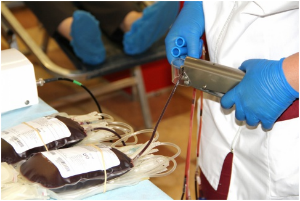
 “Full integration to database will prevent cases of blood donation by a person with an absolute discharge, even if he or she is registered in another region. It also allows us to reliably find out the reasons for refusal from the earlier donation,” said Olga Mayorova.
Reliable information about citizens, who have not been allowed to blood donation for any contraindications, will save funds spent for blood procurement and testing of donors. Furthermore, it will reduce the risk to the health of the donor, if he got failure not due to an infectious disease.
There are two stations of blood transfusion and transfusion points in 16 general hospitals in Moscow. Since capital's doctors don’t have a full access to the federal database, they use only the database of the Moscow region in case of checking a potential donor.
Automated Transfusion System was launched in Russia in 2008. By the end of 2015, almost all the regions of Russia joined the system. Moscow region has the largest donor database and will be integrated into the system one of the latter.
Olga Mayorova also recalled that any Russian citizen could donate blood in Moscow even if he does not have the registration in the capital.
Moreover, foreigners should live in Russia on legal conditions for at least a year. Those people who decided to become a donor must have a passport or an identity document (such as a military ID).
News source: http://www.m24.ru/articles/90728
Photo source: http://b1.m24.ru/c/546156.483xp.jpg


